
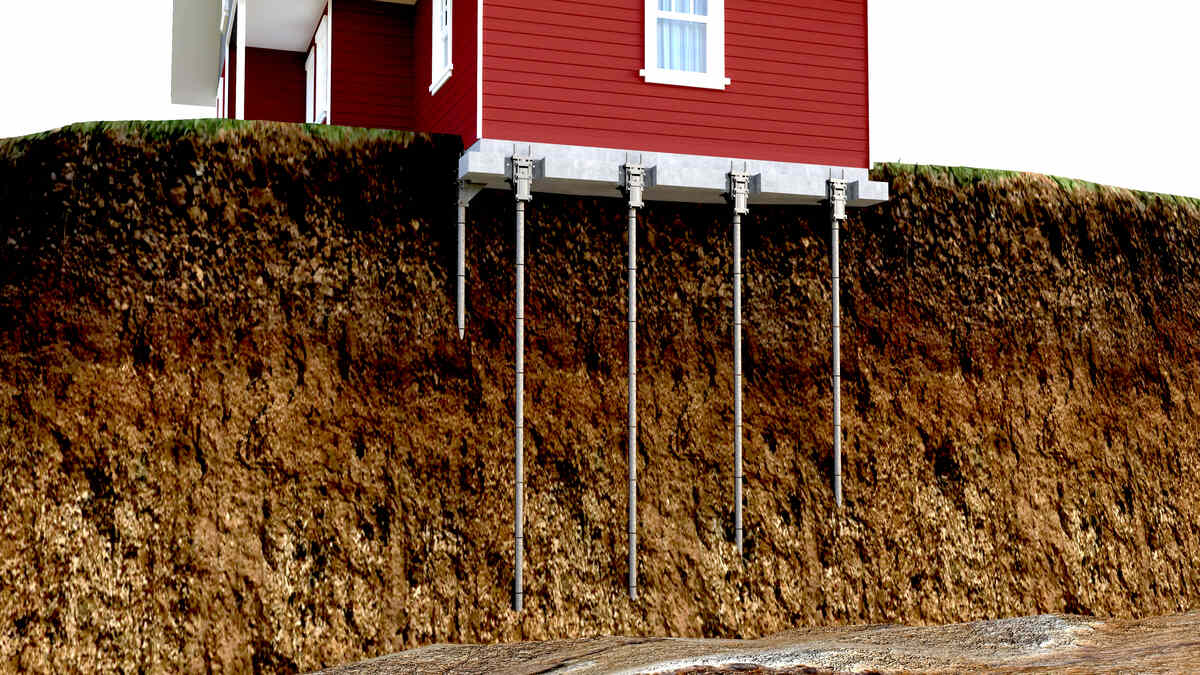
Accelerated foundation settlement occurs when the soil beneath a building compresses or shifts more rapidly than expected, causing the structure to sink unevenly. This phenomenon can lead to significant structural damage, including cracks in walls and floors, misaligned doors and windows, and even compromised stability. Understanding what causes accelerated foundation settlement is essential for preventing costly repairs and ensuring the longevity of any construction project.
One primary cause of accelerated foundation settlement is poor soil conditions. Some soils, such as clay or peat, are highly compressible and prone to shrinkage or expansion with changes in moisture content. When heavy loads from buildings are placed on these types of soils without proper treatment or reinforcement, they tend to compact quickly under pressure. Additionally, loose or poorly compacted fill material used during site preparation can settle over time as it consolidates under weight.
Water plays a crucial role in accelerating foundation settlement as well. Excessive moisture infiltration from leaking pipes, poor drainage systems, or high groundwater levels weakens get the latest updates soil’s strength by increasing pore water pressure. This reduces friction between soil particles and causes them to shift more easily under load. Seasonal variations in moisture content also contribute; for example, dry periods may cause clay soils to shrink while wet seasons lead them to swell unpredictably.
Another factor contributing to rapid settlement is nearby construction activity that alters the stress distribution within the ground. Excavations close to existing foundations remove lateral support for surrounding soils and increase vertical stresses elsewhere. Vibrations caused by heavy machinery can disturb loosely packed soil layers further promoting movement beneath structures.
Improper design choices often exacerbate these issues if geotechnical investigations are insufficient before construction begins. Without detailed knowledge of subsurface conditions, engineers might select unsuitable foundation types like shallow footings where deep piles would be necessary for stability on soft ground.
Preventing accelerated foundation settlement requires thorough site assessment prior to building work commencement. Conducting comprehensive soil tests helps identify potential risks related to compressibility and drainage characteristics so appropriate mitigation strategies can be implemented early on.
Effective measures include improving drainage around foundations through grading land away from structures and installing French drains or sump pumps where needed to control water accumulation near critical areas.
Soil stabilization techniques such as compaction grouting or chemical injection reinforce weak soils making them less susceptible to compression over time. Choosing suitable foundation systems tailored specifically for site conditions-like deep pile foundations reaching stable strata instead of relying solely on surface soils-significantly reduces risks associated with uneven settling. Regular maintenance inspections after construction detect early signs of moisture intrusion leaks enabling prompt repairs which prevent prolonged exposure that accelerates deterioration. In conclusion, accelerated foundation settlement results mainly from unfavorable soil properties combined with excess moisture influence and external disturbances affecting ground stability beneath structures. Proactive planning involving detailed geotechnical evaluation along with effective water management practices ensures safe long-term performance minimizing costly remediation efforts later down the line.